Ebola Outbreak Declared Global Health Emergency: What the World Needs to Know
24/May/2026 22:16
Share:
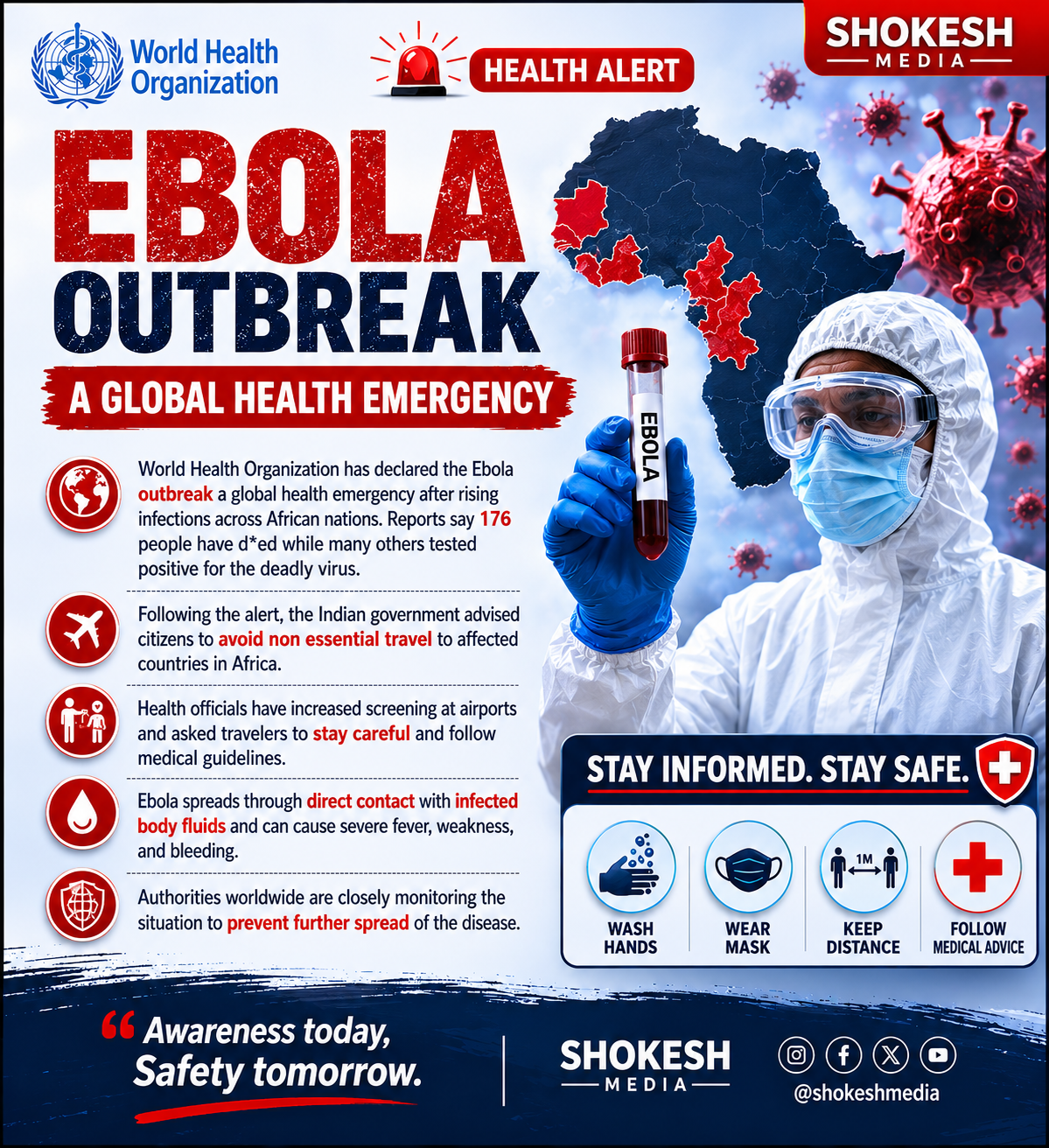
The world is once again facing a serious public health concern as the World Health Organization has officially declared the recent Ebola outbreak a Global Health Emergency. The announcement comes after rising infections across several African nations, with reports confirming that at least 176 people have lost their lives while many others have tested positive for the deadly virus.
The declaration has triggered international concern, leading governments and health agencies worldwide to increase monitoring, travel screening, and emergency preparedness measures.
Why the Ebola Outbreak Is Alarming
Ebola is considered one of the world’s deadliest viral diseases due to its high fatality rate and rapid spread through direct human contact. Health experts are worried because infections are increasing across multiple regions, raising fears of wider transmission if strict precautions are not followed.
Following the WHO alert, the Indian government has advised citizens to avoid non-essential travel to affected African countries. Airports and international travel hubs have also intensified health screenings for passengers arriving from high-risk regions.
Authorities are closely monitoring travelers, symptoms, and possible transmission chains to prevent the virus from spreading internationally.
What Is Ebola?
Ebola is a severe viral illness that spreads through:
Direct contact with infected body fluids
Contact with contaminated surfaces or materials
Exposure to infected animals or patients
The virus can cause serious health complications and, in severe cases, may become fatal.
Common Symptoms of Ebola
People infected with Ebola may experience:
High fever
Severe weakness and fatigue
Muscle pain
Vomiting and diarrhea
Internal or external bleeding
Headaches and sore throat
Early medical treatment and isolation are critical in controlling the spread.
India on Alert
In response to the emergency declaration, Indian health authorities have increased surveillance measures at airports and border checkpoints. Travelers are being advised to stay alert, report symptoms immediately, and follow all medical guidelines issued by health officials.
Hospitals and emergency health teams are also reviewing preparedness protocols in case suspected cases are detected.
How to Stay Safe
Health experts recommend the following precautions:
✅ Wash hands regularly
✅ Avoid direct contact with infected individuals
✅ Follow official travel advisories
✅ Wear protective gear in high-risk environments
✅ Seek medical attention immediately if symptoms appear
Misinformation during health emergencies can spread quickly, so people are encouraged to rely only on verified medical and government sources.
Global Cooperation Is Critical
International organizations, governments, and medical teams are now working together to contain the outbreak before it escalates further. Rapid response, awareness, and public cooperation will play a major role in preventing another global health crisis.
The situation remains under close observation, and health officials continue to urge people worldwide to stay informed and cautious.