This is perfect for MBA, B.Com, and other commerce subjects.
---
⭐ 1. CONCEPT OF FINANCIAL SERVICES
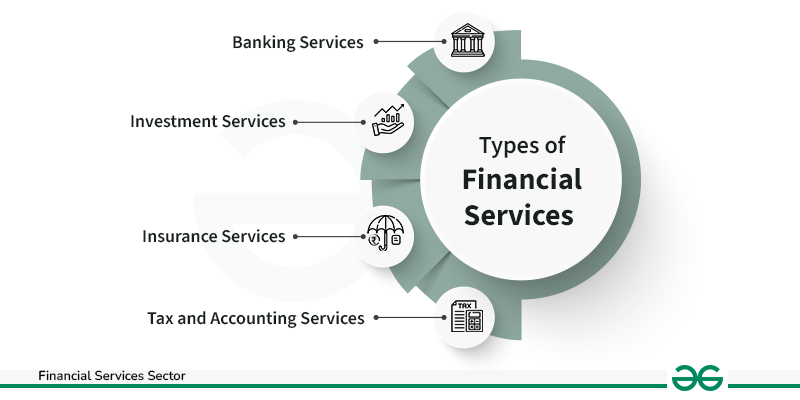
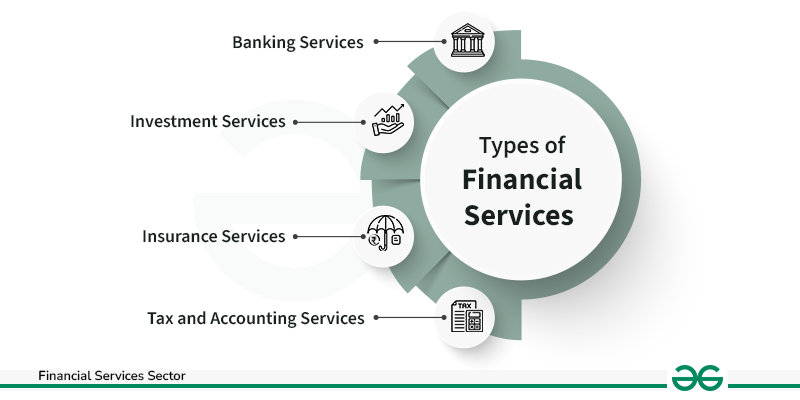
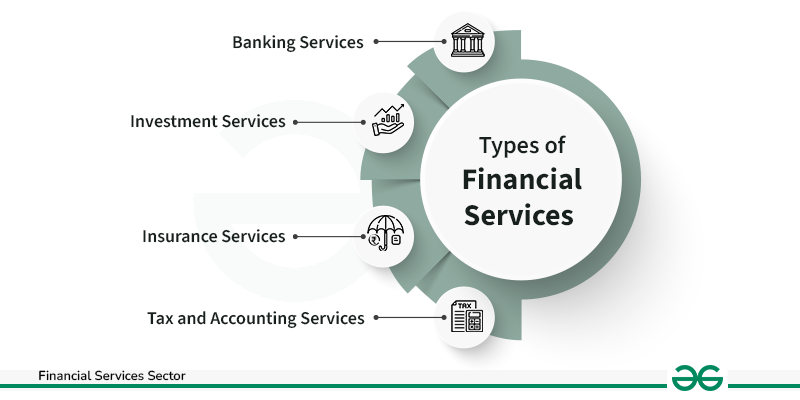
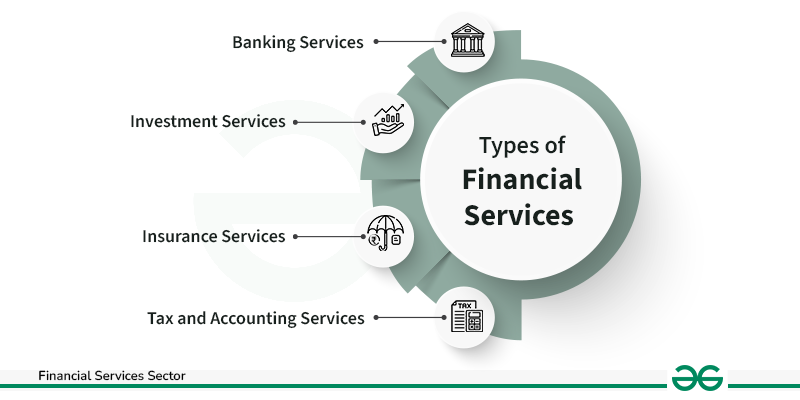
Financial services refer to all the economic services provided by the finance industry aimed at mobilizing savings, allocating funds, managing risks, and supporting financial transactions. These services enable individuals, businesses, and governments to acquire financial resources, invest wisely, manage risks, and facilitate smooth economic activities.
The financial services sector includes banks, insurance companies, NBFCs, mutual funds, stockbrokers, investment bankers, credit rating agencies, venture capital funds, leasing companies, and financial advisors.
Financial services act as a bridge between savers and borrowers and help in the growth of the economy by promoting investment, trade, and production.
---
⭐ 2. MEANING AND DEFINITION OF FINANCIAL SERVICES
✔ Meaning
Financial services are services provided by financial institutions to facilitate financial activities such as borrowing, lending, investing, insuring, and managing money.
✔ Definition
According to the Government of India:
"Financial services mean services rendered by financial institutions to facilitate financial transactions and processes such as mobilization of savings, allocation of funds, risk management, and investment services."
In simple terms:
? Financial services help people manage money—save, invest, borrow, insure, and transact.
---
⭐ 3. CONCEPTUAL FRAMEWORK OF FINANCIAL SERVICES
The conceptual framework shows how financial services operate within the financial system:
(a) Mobilization of Savings
Collecting savings from households through deposits, mutual funds, insurance premiums, etc.
(b) Transfer of Funds
Channels savings to productive sectors such as industries, real estate, agriculture.
(c) Risk Transformation
Converts individual risks into manageable risks through insurance, diversification, and hedging.
(d) Payment Mechanism
Enables smooth transactions through UPI, NEFT, credit cards, payment banks, digital wallets.
(e) Value Addition Services
Investment advisory
Portfolio management
Credit rating
Asset management
Merchant banking
(f) Regulatory Framework
Services operate under institutions like:
RBI
SEBI
IRDAI
PFRDA
Ministry of Finance
Thus, financial services act as the foundation of the financial system by enabling capital formation and economic growth.
---
⭐ 4. NATURE & CHARACTERISTICS OF FINANCIAL SERVICES
1. Intangibility
Financial services cannot be seen or touched; they are performance-based (e.g., insurance, investment advice).
2. Customer Oriented
Services are customized to meet customer needs—loans, insurance policies, investment portfolios.
3. Inseparability
Production and consumption occur simultaneously (e.g., financial advice is consumed instantly).
4. Perishability
Financial services cannot be stored; unused service capacity (like unused loan limits) cannot be saved.
5. Variability
Quality may differ across branches, advisors, and employees.
6. People-Based Services
Employees' skill, knowledge, and behavior strongly affect service quality.
Financial services form the backbone of modern economies.
They:
✔ mobilize savings
✔ promote investment
✔ facilitate smooth financial transactions
✔ manage risks
✔ support industrial and economic growth
The scope of financial services is extremely wide, covering everything from banking and insurance to investment management, venture capital, advisory services, and capital market operations.