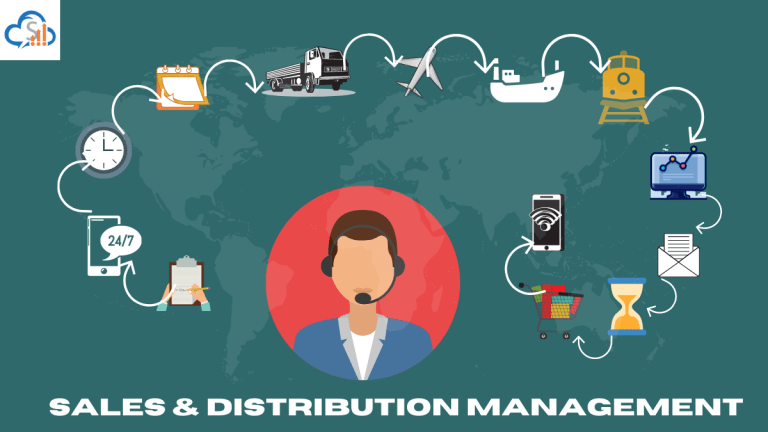
Sales & Distribution Management — What we’ll cover (complete guide)
Below is a clear, exam-and-practical friendly walkthrough of all the topics you listed. Each section contains: a concise definition, its purpose, key components/steps, practical tips, and short examples or mini case studies so you can apply the theory.
---
1. Nature and Scope of Sales Management
Meaning & Nature
Sales management is the planning, direction and control of the personal selling function. It blends strategy (who to sell to, what to sell, and how) with tactics (recruiting, training, motivating salespeople, territories, quotas, evaluation). Sales management is both people-centric and results-driven.
Key Characteristics
Goal oriented: Targets, revenues, market share.
People intensive: Sales force is the organisation’s frontline.
Short-cycle feedback: Sales results produce fast feedback for strategy adjustment.
Scope (what it covers)
Setting sales objectives and budgets
Sales forecasting and territory design
Recruitment, selection and training of sales personnel
Sales motivation, compensation and incentives
Sales operations: order processing, routing, CRM, field supervision
Channel management and distribution strategy
Sales performance appraisal and control
Why it matters
Sales management translates marketing strategy into revenue. Well-run sales management improves customer relationships, reduces cost per sale and increases lifetime value.
Example: A consumer electronics firm uses sales management to set monthly dealer targets, organise product demo schedules, and monitor field conversion rates.
---
2. Setting / Formulation of Personal Selling Objectives
Definition
Personal selling objectives are specific, measurable goals set for the sales force (e.g., increase sales volume, acquire new accounts, improve retention, launch product).
Steps to formulate objectives
1. Link to corporate/marketing goals (growth, market share, profitability).
2. Segment & prioritise: new customers, key accounts, geographic markets.
3. Set SMART objectives: Specific, Measurable, Achievable, Relevant, Time-bound.
4. Allocate down to territory and individual levels (territory quotas, call rates).
5. Define KPIs: sales revenue, units sold, new accounts, retention rate, average order value.
Process objectives: number of calls, demos, meetings.
Behavioral objectives: cross-sell ratio, service levels.
Strategic objectives: enter new segments, introduce new products.
Practical tip
Combine lagging (sales revenue) and leading indicators (number of qualified leads) so you can predict outcomes.
Example objective: “Increase sales of Product X by 20% in North Region (Q1–Q4) by adding 150 new retail outlets and improving repeat purchase rate from 30% to 40%.”
---
3. Recruitment, Recruiting and Selecting Sales Personnel
Purpose
Hire people who can achieve sales targets, represent the brand and build customer relationships.
Recruitment process
1. Workforce planning: determine vacancies by territory, attrition, expansion.
Use structured interviews and situational role plays. Measure past performance with verifiable metrics (e.g., #accounts opened, sales growth).
Case example
A B2B SaaS firm hires salespeople with prior channel experience, gives scenario-based role plays (selling to CFO), and uses scorecards to rank candidates.
---
4. Developing and Conducting a Sales Training Program
Goal
Equip sales staff with skills, product knowledge, and behaviours to perform.
A pharma firm runs a two-week induction (product + medical ethics), 1-day quarterly refreshers, and monthly role-play clinics focused on new indications.
---
5. Sales Meeting and Sales Contest
Sales meetings
Purpose: align teams, share updates, coach, motivate and solve field problems.
Types
Daily huddles: brief status, priorities for the day.
Weekly/Monthly meetings: pipeline review, best practice sharing.
Quarterly business reviews: strategy, objectives, territory performance.
Annual sales kickoff: big event for targets, awards, training.
Effective meeting practices
Clear agenda & timebox
Focus on coaching, not policing
Use data: dashboards, win/loss analysis
Allow reps to present success stories
End with action items and owners
Sales contests
Purpose: short-term motivation, spur activity (calls, demos, new accounts), accelerate adoption (new product).
Design rules
Align with business objective (not just vanity metrics).
Simple & transparent rules (how winners are chosen).
A consumer electronics company uses distributors for smaller towns, company stores in metros, and its own e-commerce site — a hybrid channel to maximise reach and margins.
---
7. Channel Information Systems and Channel Management
Channel Information System (CIS) — meaning
A CIS collects, processes and shares data across the channel: sales, inventory, orders, customer complaints, promotions effectiveness. Often implemented via ERP, CRM, POS integrations, EDI, or APIs.
A FMCG company reduced out-of-stocks by 35% after deploying a distributor portal (real-time stock visibility) + automated replenishment triggers and instituting monthly JBP meetings with top 50 distributors.
---
8. Putting it Together — End-to-End Sales & Distribution Flow (Practical checklist)
Sales analytics, win/loss reviews, route optimization, A/B test promotions.
---
Quick Examples & Case Studies (short)
Example — B2B SaaS: direct inside sales + enterprise field team for large deals. Use trials, SDRs to qualify leads, quota per AE, monthly pipeline reviews, product training monthly, incentive = commission on ARR + bonuses for logo wins.
Example — FMCG: distributor network for rural reach, modern trade teams for chain stores, execution teams for merchandising, distributor portal for orders/inventory, sales contests for route-level promoters.
Case: Launching a new product
Objective: achieve 10% trial penetration in Q1.
Tactics: targeted dealer incentives, sales training on benefits, demo units, 30-day free trial for key accounts, retailer display contests, track using CIS.
---
Final practical tips (to implement immediately)
Set sales objectives that are measurable and cascading (company → region → rep).
Hire for attitude and coach for skill — sales skills can be taught, attitude harder to change.
Use data (CIS) rather than instincts to manage stock, routes and promotions.
Keep sales meetings short and action-oriented — end each meeting with 3 clear actions.
Design contests to encourage desired behaviour (calls, demos, new accounts), not just volume.
Treat key channel partners as customers — do joint plans, share data and rewards fairly.