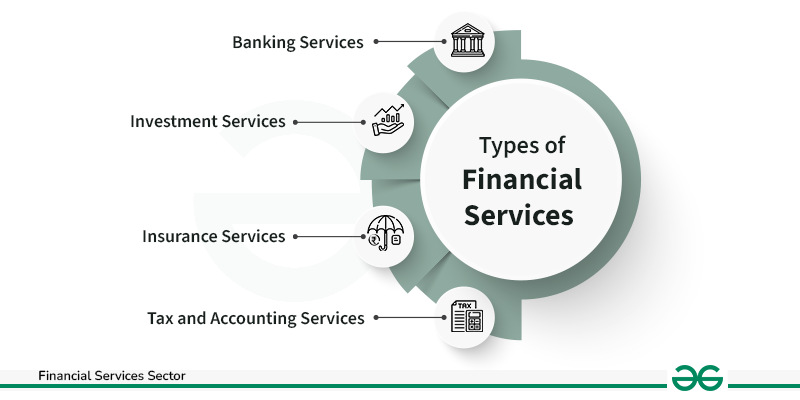
Regulation of financial services exists to ensure that the financial system functions in a safe, efficient, transparent and fair manner. The main objectives are:
Financial stability — contain systemic risk and prevent failures that can cascade.
Prudential safety — ensure solvency and soundness of regulated entities.
Consumer protection — protect depositors, policy-holders and investors from fraud, mis-sell and unfair practices.
Market integrity — ensure fair, orderly and transparent markets and price discovery.
Prevention of misuse — combat money-laundering, fraud, market manipulation and financing of illicit activities.
Promote competition & innovation — allow new entrants and technologies while managing risks.
---
2. Institutional architecture — main regulators and their roles
India’s regulatory system is multi-agency, each regulator having mandate over specific parts of the financial ecosystem.
Reserve Bank of India (RBI)
Role: Central bank and principal regulator for banking, payments, NBFCs (to an extent), forex and monetary stability.
Key functions: Licensing banks/NBFCs/payment system operators; prudential norms (capital, liquidity); supervision (on-site & off-site); regulation of payment systems and digital payments; monopoly of currency issue; AML/KYC guidance (with FIU-IND and PMLA).
Insurance Regulatory and Development Authority of India (IRDAI)
Role: Regulates insurance sector—life, general and reinsurance related activities.
Key functions: Licensing insurers, product approvals, solvency and capital adequacy norms, distribution and agent regulations, consumer protection and grievance redressal.
Pension Fund Regulatory & Development Authority (PFRDA)
Role: Regulates pension sector (including National Pension System) — licensing pension fund managers, safeguarding subscribers’ interests, standards for retirement product design.
Insolvency and Bankruptcy Board of India (IBBI)
Role: Regulator of insolvency professionals, insolvency professional agencies and information utilities under the Insolvency & Bankruptcy Code (IBC).
Function: Oversee corporate and financial restructuring and resolution processes.
Ministry of Finance / Department of Financial Services (DFS)
Role: Policy direction, fiscal interventions, ownership/oversight of public sector banks, coordination with regulators and international bodies.
Ministry of Corporate Affairs (MCA)
Role: Corporate law, company registration, governance standards under Companies Act; oversight of corporate compliance.
Financial Intelligence Unit — India (FIU-IND)
Role: National agency to receive, process, analyze and disseminate suspicious transaction reports (STRs) under the Prevention of Money Laundering Act (PMLA).
Other important bodies
Competition Commission of India (CCI) — competition in financial services.
National Housing Bank (NHB) — housing finance (note: some functions evolving).
Regulatory sandboxes & innovation facilitation: controlled environments for fintech products (RBI, SEBI, IRDAI have sandbox initiatives).
AML/CFT compliance: KYC, STR reporting to FIU, sanctions screening.
---
5. Coordination and overarching bodies
Multiple regulators require coordination to manage systemic risk and overlapping domains:
Financial Stability and Development Council (FSDC): an apex coordinating forum (chaired by the Finance Minister) to monitor macroprudential and systemic issues, coordinate regulators and advise on policy.
FSDC sub-committees and technical groups — for data sharing, crisis management, financial stability.
Memoranda of Understanding (MoUs) between regulators and with international counterparts for information exchange, supervision of cross-border entities.
Inter-regulatory committees — e.g., on fintech, payment systems, cyber security.
---
6. Consumer protection, transparency and grievance redressal
Regulation emphasizes customer rights:
Mandatory disclosures (fees, charges, risk factors) for products.
Fair practice codes (banks, NBFCs, insurers).
Ombudsman mechanisms: Banking Ombudsman (RBI), Insurance Ombudsman (IRDAI), SEBI SCORES for investors, NBFC Ombudsman.
Investor education & awareness programs by SEBI, RBI and IRDAI.
Compensation frameworks and investor protection funds for fraud/loss cases.
---
7. Contemporary regulatory priorities and challenges
Regulation must adapt to evolving risks:
Key challenges
Fintech & digital payments: rapid innovation raises operational, cyber, and conduct risks. Regulators respond via licensing, sandboxing and guidelines for APIs, wallets, UPI, NBFC digital lenders.
Non-bank financial intermediation (NBFC/Shadow banking): runs and leverage can transmit systemic stress; requires calibrated regulation.
Complex market products & derivatives: need robust market surveillance and investor education.
Cybersecurity and data privacy: financial sector is a prime cyber target; regulators mandate incident reporting and controls.
Cross-border supervision: globalization needs harmonised rules and supervisory cooperation.
Cryptocurrencies & virtual assets: pose policy and regulatory dilemmas (consumer protection, AML, financial stability). Different regulators coordinate on permissibility, taxation and controls.
Regulatory arbitrage & overlap: multi-agency environment can create gaps or duplication; coordination is critical.
Climate & ESG risks: integrating climate risk into prudential frameworks and disclosures is emerging priority.
Financial inclusion vs safety trade-offs: expanding access while maintaining soundness.
---
8. Regulatory approaches — principles and best practices
Modern regulation emphasizes:
Risk-based supervision: focus on entities/activities that pose higher risk.
Proportionality: lighter rules for smaller/non-systemic entities.
Principles-based regulation plus rules: flexibility balanced with clear standards.
Forward-looking macroprudential regulation: prevent build-up of systemic risks.
Technology-enabled supervision (RegTech / SupTech): use analytics for surveillance.
Transparency and accountability: publication of rules, reasoned decisions and stakeholder consultations.
---
9. Strengthening the framework — suggested measures
To improve effectiveness regulators can:
1. Improve inter-regulatory data sharing & consolidated supervision for large, systemically important financial groups.
2. Expand and deepen implementation of macroprudential tools to address procyclicality and sectoral overheating.
3. Enhance cybersecurity, operational resilience and incident reporting standards.
4. Scale up regulatory capacity (staff skills, technology) and supervisory analytics.
5. Harmonize consumer protection standards and streamline grievance redress across sectors for a consistent user experience.
6. Promote transparent governance and faster resolution mechanisms (IBC/insolvency processes) for financial firms.
7. Adopt proportionate regulation for fintechs with robust sandbox outcomes to balance innovation and protection.
8. Integrate climate-related financial risk disclosures into prudential supervision.
---
10. Concluding remarks
India’s regulatory framework for financial services is broad and multi-layered, designed to balance stability, efficiency, market integrity and inclusion. It relies on specialised regulators (RBI, SEBI, IRDAI, PFRDA, IBBI, MCA) backed by sectoral legislation, supervisory tools and coordination mechanisms like the FSDC. The environment is dynamic — technological change, new products, and evolving systemic risks require regulators to be adaptive, collaborative and forward-looking while ensuring robust consumer protection and market discipline.