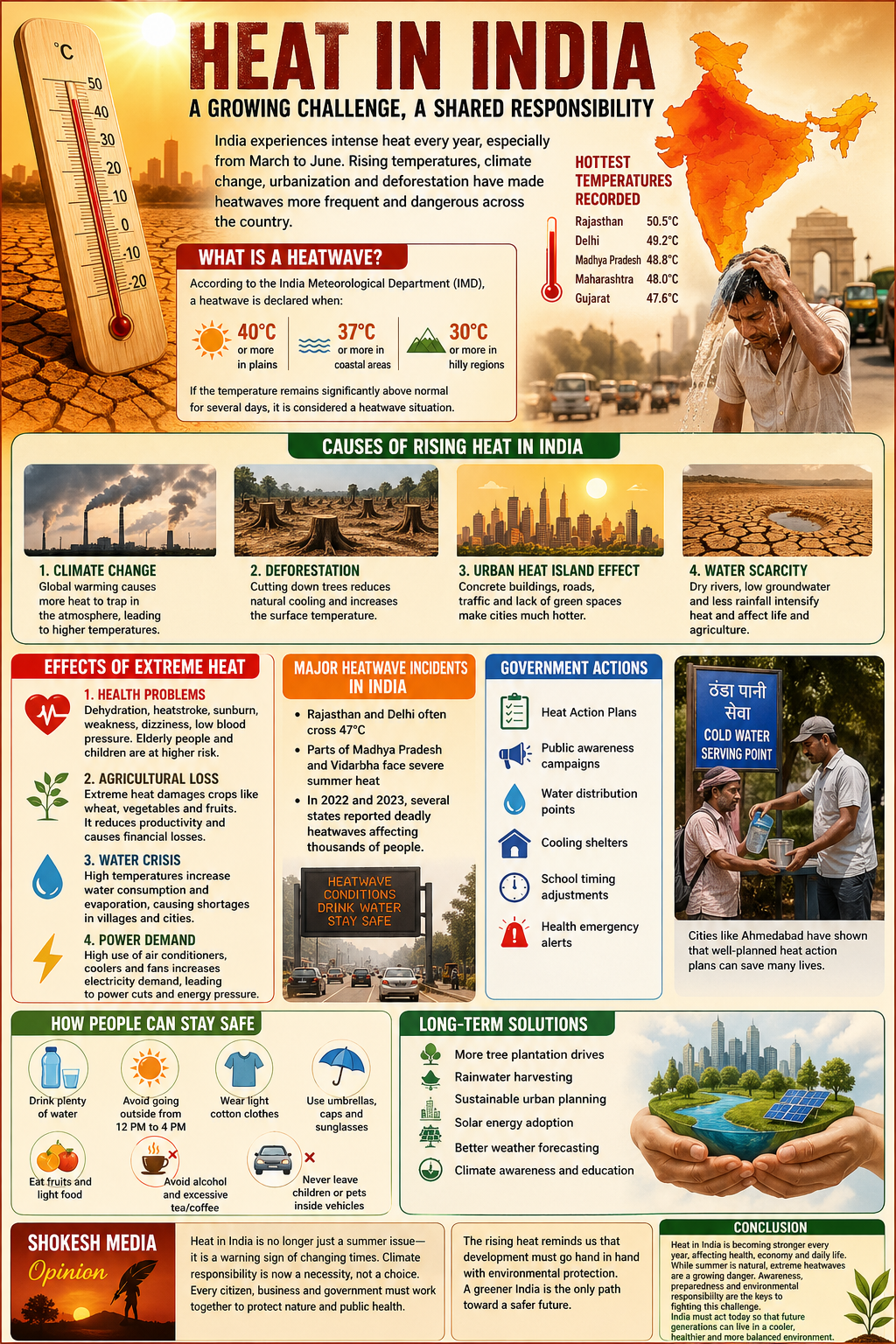
India experiences intense heat every year, especially during the summer months from March to June. Heat is not just a seasonal condition—it has become a major environmental, social, and economic concern. Rising temperatures, climate change, urbanization, and deforestation have made heatwaves more frequent and dangerous across the country.
Understanding Heat in India
India has a tropical climate, and during summer, many regions face extremely high temperatures. Northern, Central, and Western India are especially affected. States like Rajasthan, Madhya Pradesh, Delhi, Uttar Pradesh, Gujarat, Maharashtra, and parts of Telangana often record temperatures above 45°C.
The hot winds known as “Loo” blow across northern plains, making conditions even harsher. These dry and extremely hot winds can cause dehydration, heatstroke, and serious health problems.
What is a Heatwave?
A heatwave is a prolonged period of excessively hot weather. According to the India Meteorological Department (IMD), a heatwave is declared when:
Temperature reaches 40°C or more in plains
37°C or more in coastal areas
30°C or more in hilly regions
If the temperature remains significantly above normal for several days, it is considered a heatwave situation.
Causes of Rising Heat in India
1. Climate Change
Global warming is one of the biggest reasons behind increasing heat in India. Rising greenhouse gases trap more heat in the atmosphere, causing temperatures to rise every year.
2. Deforestation
Trees help cool the environment by providing shade and maintaining moisture. Large-scale cutting of forests reduces natural cooling systems.
3. Urban Heat Island Effect
Cities like Delhi, Mumbai, and Ahmedabad become hotter because of concrete buildings, roads, traffic, and lack of green spaces.
4. Water Scarcity
Dry rivers, reduced groundwater, and low rainfall worsen the heat impact. Lack of water increases discomfort and affects agriculture.
Effects of Extreme Heat
1. Health Problems
Heat causes:
Dehydration
Heatstroke
Sunburn
Weakness and dizziness
Low blood pressure
Increased risk for elderly people and children
Outdoor workers like farmers, laborers, delivery staff, and street vendors suffer the most.
2. Agricultural Loss
Extreme heat damages crops like wheat, vegetables, and fruits. It reduces productivity and creates financial losses for farmers.
3. Water Crisis
High temperatures increase water consumption and evaporation, causing shortages in villages and cities.
4. Power Demand
Air conditioners, coolers, and fans increase electricity demand, leading to power cuts and energy pressure.
Major Heatwave Incidents in India
In recent years, India has seen record-breaking temperatures:
Rajasthan and Delhi often cross 47°C
Parts of Madhya Pradesh and Vidarbha face severe summer heat
In 2022 and 2023, several states reported deadly heatwaves affecting thousands of people
These events show that heat is becoming more dangerous and frequent.
Government Actions
The Government of India and state governments have introduced:
Heat Action Plans
Public awareness campaigns
Water distribution points
Cooling shelters
School timing adjustments
Health emergency alerts
Cities like Ahmedabad became known for implementing successful heat action plans.
How People Can Stay Safe
Personal Safety Tips
Drink plenty of water
Avoid going outside from 12 PM to 4 PM
Wear light cotton clothes
Use umbrellas, caps, and sunglasses
Eat fruits and light food
Avoid alcohol and excessive tea/coffee
Never leave children or pets inside vehicles
Long-Term Solutions
India needs strong action to reduce heat risks:
More tree plantation drives
Rainwater harvesting
Sustainable urban planning
Solar energy adoption
Better weather forecasting
Climate awareness and education
SHOKESH MEDIA Opinion
Heat in India is no longer just a summer issue—it is a warning sign of changing times. Climate responsibility is now a necessity, not a choice. Every citizen, business, and government must work together to protect nature and public health.
The rising heat reminds us that development must go hand in hand with environmental protection. A greener India is the only path toward a safer future.
Conclusion
Heat in India is becoming stronger every year, affecting health, economy, and daily life. While summer is natural, extreme heatwaves are a growing danger. Awareness, preparedness, and environmental responsibility are the keys to fighting this challenge.
India must act today so that future generations can live in a cooler, healthier, and more balanced environment.