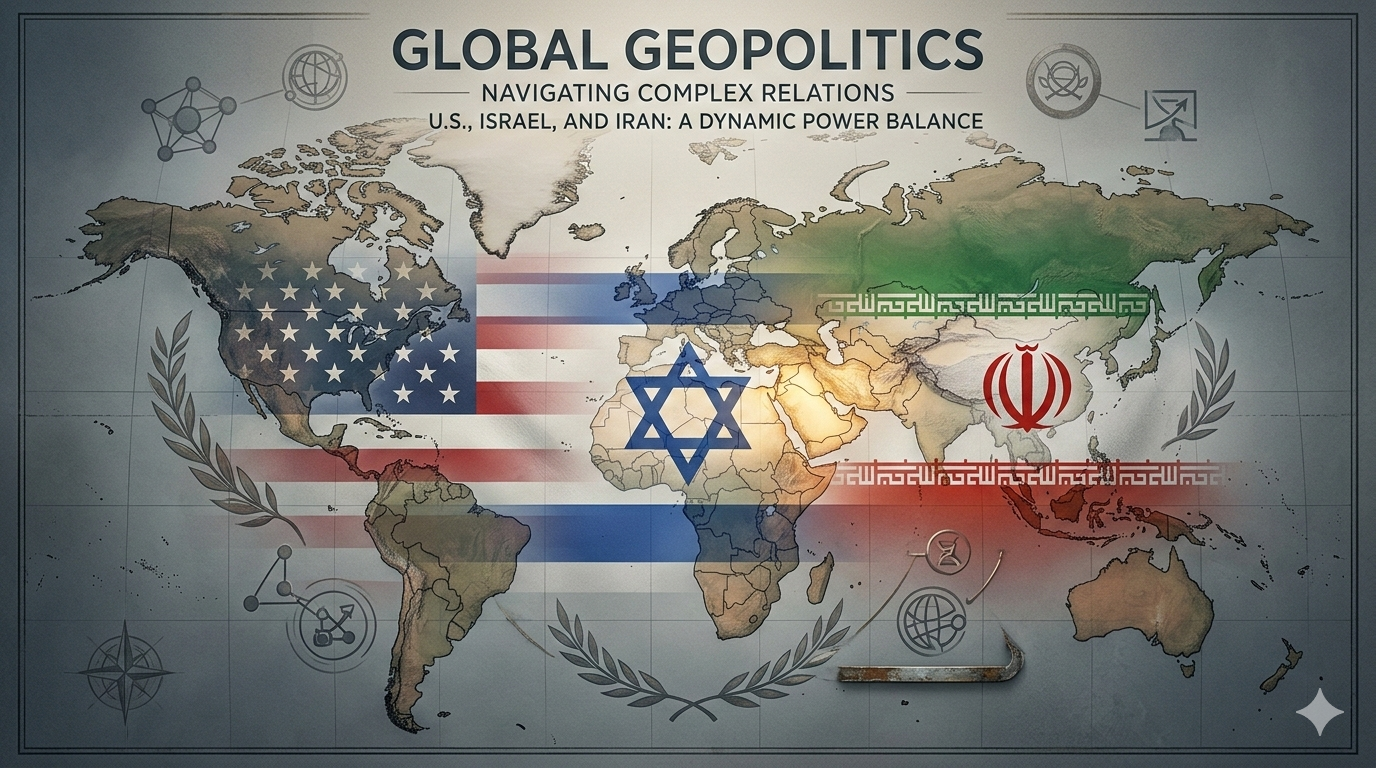
Understanding the Tensions Between the United States, Israel, and Iran: A Neutral Overview
01/March/2026 23:48
Share:
Simplified Explanation for Students
1. Who Are the Three Countries?
The three countries involved are the United States, Israel, and Iran.
The United States is a powerful country that has strong influence around the world.
Israel is a country in the Middle East and a close ally of the United States.
Iran is another important country in the Middle East with its own political and military influence.
---
2. Why Is There Tension?
The tension mainly exists because of:
Historical problems between the U.S. and Iran since 1979.
Israel’s security concerns, as it believes Iran could become a military threat.
Iran’s regional influence, as it supports groups in nearby countries that oppose Israel.
Nuclear program issues, because some countries fear Iran could develop nuclear weapons.
---
3. Why Do Conflicts Happen?
Conflicts usually happen when:
One country feels threatened.
There are missile or drone attacks.
Political leaders want to show strength.
Military actions are taken as retaliation.
Each country says it is acting for its own protection. However, when one side attacks, the other often responds, and this creates a cycle of tension.
---
4. How Does This Affect the World?
Oil prices can increase.
Global markets may become unstable.
Other countries may get involved diplomatically.
There is fear of a larger regional war.
---
5. Important Lesson for Students
International conflicts are rarely simple. They often involve history, politics, religion, security, and power struggles. Understanding different viewpoints helps students think critically and stay informed without taking sides.
---
? Neutral Blog Post for Publishing
Understanding the Tensions Between the United States, Israel, and Iran
The relationship between the United States, Israel, and Iran has been shaped by decades of political disagreements, security concerns, and regional power dynamics. While headlines often focus on military developments, the roots of this tension go much deeper.
Historical Background
The strained relationship between the United States and Iran began after Iran’s 1979 revolution. Since then, diplomatic relations have remained limited, and economic sanctions have frequently been used as a tool of pressure. Israel, a close ally of the United States, has also expressed long-standing concerns about Iran’s policies and regional activities.
Security and Nuclear Concerns
One of the central issues is Iran’s nuclear program. Western countries, including the United States, have expressed concern that nuclear development could lead to weapons capability. Iran maintains that its program is for peaceful purposes. Israel views any potential nuclear threat as a serious security risk.
Regional Influence and Proxy Groups
Iran has political and military influence in several Middle Eastern countries. Israel sees some of these alliances as hostile. This has led to indirect confrontations and strategic competition across the region.
Why Escalations Occur
Escalations typically follow specific events such as missile attacks, military strikes, or political decisions. In many cases, actions are described as defensive or preventive by the countries involved. However, these moves can lead to retaliation and increased instability.
Global Impact
Tensions between these nations affect more than just the Middle East. Global oil markets, trade routes, diplomatic relations, and international security are all influenced by developments in this region.
A Call for Understanding
While opinions may differ, understanding the historical context and security concerns of each nation allows for a more balanced perspective. Peaceful dialogue and diplomatic efforts remain essential to reducing long-term tensions.